Proof of purchase versus proof of installation: what each photo can establish
Compare receipts, invoices, serial labels, and installation photos—and avoid asking one image to prove facts it cannot show.

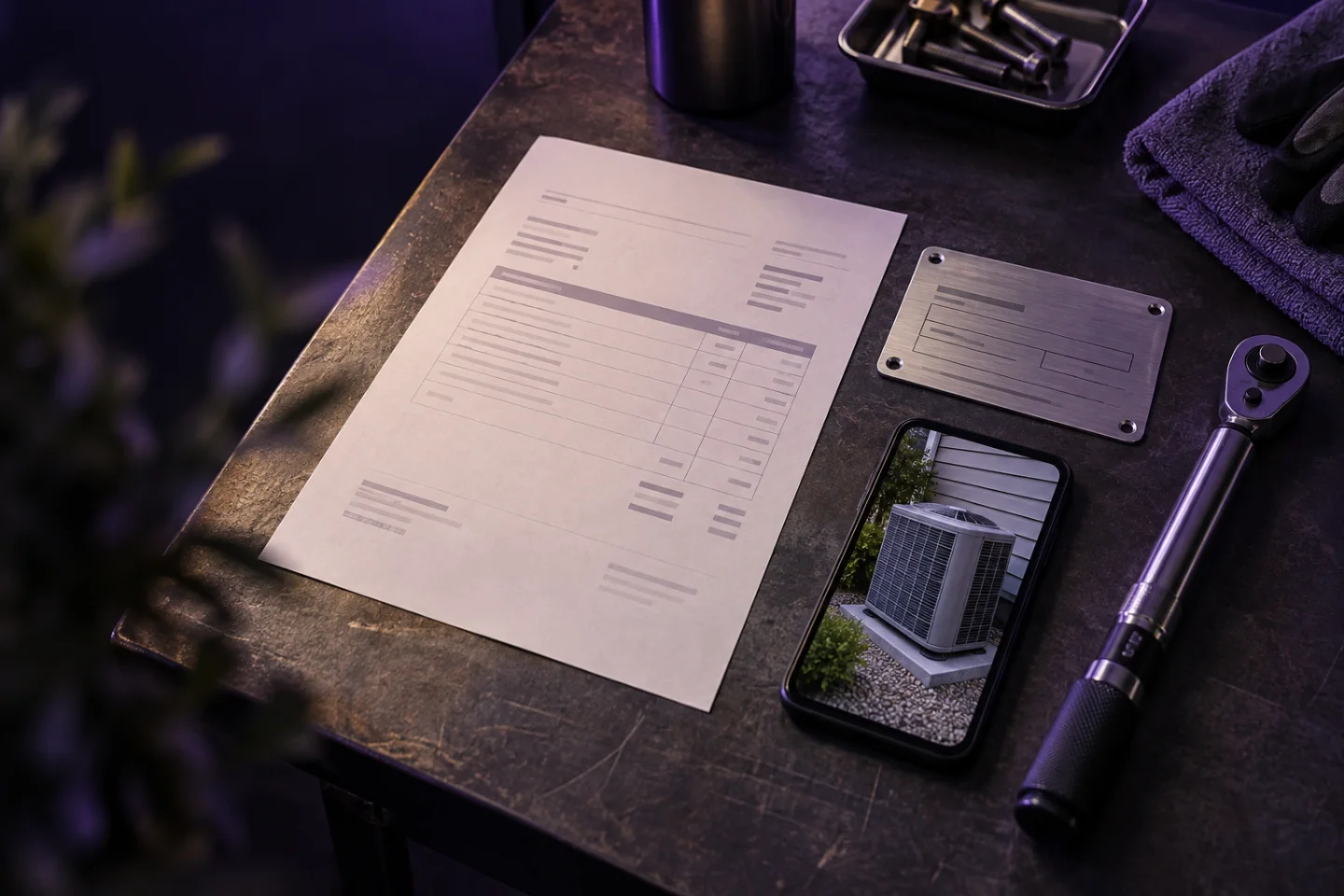
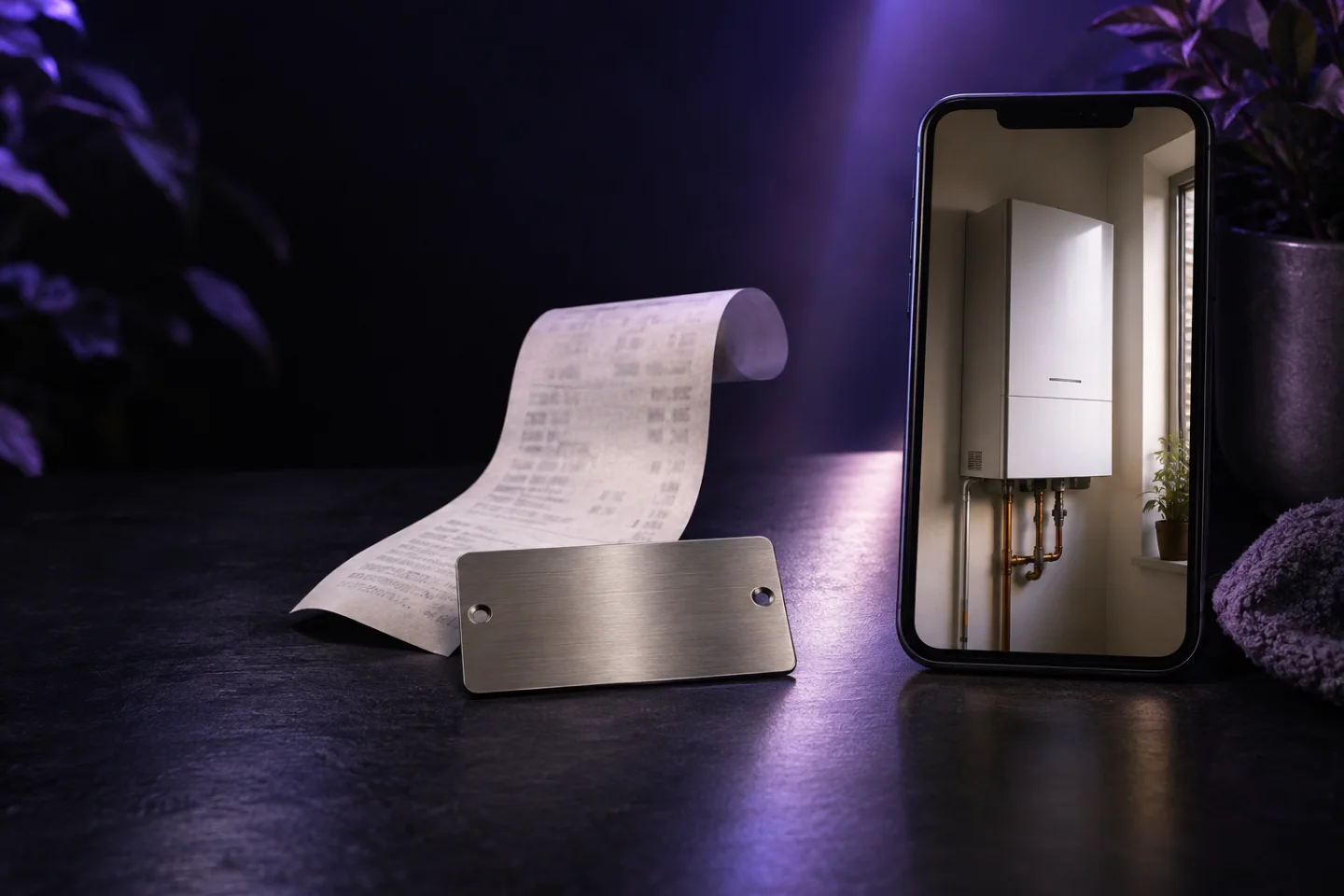
Proof of purchase and proof of installation answer different questions. A receipt can show that a transaction occurred. An installation photo can show that a product appears at a site in a visible condition. Neither one automatically proves the other.
Programs get into trouble when they ask a single photo for a legal or operational conclusion it cannot support: “This invoice proves the unit was installed correctly,” or “This site photo proves the participant bought the product during the campaign.” A better workflow lists the facts required for the decision and assigns each fact to an evidence source.
Four evidence types, four jobs
Receipt. Useful for retailer, purchase date, line items, quantities, discounts, total, and currency. Retail descriptions may be abbreviated, and a receipt does not identify a particular physical unit unless it prints a serial number.
Invoice. Often contains buyer and seller details, invoice number, dates, quantities, and model descriptions. It can support a contractor or dealer claim. Steve currently accepts invoice images and single-page PDFs; multi-page PDFs need preprocessing or separate scope.
Serial or rating label. Useful for model, serial number, and visible product attributes. It links a claim to a physical identifier, but does not establish the purchase, installer, or installation date on its own.
Installation photo. Useful for bounded visual observations: product present, specified component visible, placement relative to a visible reference, or display mounted. It cannot reveal hidden wiring, internal settings, ownership, or compliance with every part of a technical code.
| Required fact | Receipt/invoice | Label | Installation photo |
|---|---|---|---|
| Purchase date | Strong | No | No |
| Seller/dealer | Strong | No | Usually no |
| Product family | Often | Strong | Sometimes |
| Unique physical unit | Rare | Strong via serial | Weak unless label is readable in scene |
| Visible placement | No | No | Strong |
| Hidden safety compliance | No | No | No |
Decide the minimum evidence set
The minimum depends on the program.
A warranty registration may need purchase date, dealer, model, and serial. A contractor incentive may need eligible products and quantities from an invoice plus participant identity. An installation bonus may also need a photo showing a defined visible condition. A maintenance reimbursement may require a service document rather than an installation image.
Collecting more photos is not automatically safer. Every extra capture increases abandonment, storage, review work, and privacy exposure. Ask for evidence only when it changes the decision.
Turn standards into observable questions
“Installation compliant” is too broad for an image check. Rewrite it as a list of visible observations:
- Is the named product visible?
- Is the required bracket visible?
- Is the label readable?
- Is the unit located in the specified visible area?
- Is the required point-of-sale material mounted?
Then state what remains outside the photo: concealed connections, torque, pressure, electrical safety, commissioning, or licensed-person status. Those may require structured declarations, sensor data, service records, or a qualified inspection.
Preserve disagreement between evidence
Suppose a synthetic claim contains:
- invoice line:
HeatPro 200; - label extraction:
HeatPro 220; - photo: a visually similar outdoor unit;
- campaign: model 200 only.
The system should not average those facts into “probably eligible.” It should show the mismatch and route the case to review. A reviewer might find a misread digit, an incorrect invoice, or an ineligible product. The reason should be recorded for audit and workflow improvement.
The same principle applies to dates, quantities, and serials. Preserve the value and its evidence source.
Understand duplicate signals
A repeated installation photo and a repeated invoice are different signals. An invoice with quantity ten may legitimately support several installations. The same serial label should usually identify one unit. A cropped version of the same site photo may indicate reuse, but it could also be a participant correcting framing.
Use duplicate signals to route decisions, not to make universal fraud claims. Configure identity fields around the terms of the program and let reviewers clear legitimate cases.
Split verification from the incentive decision
Steve can extract fields, ask bounded image questions, flag duplicate evidence, and route uncertainty. Open Loyalty can run the campaign: participant eligibility, campaign window, model bonus, cap, tier, points, challenge, or badge. An approved evidence event can be delivered as a transaction or custom event.
This distinction makes the program easier to change. Adding a double-points weekend is a campaign change. Requiring a readable serial label is an evidence-workflow change.
A practical design workshop
Bring the program terms and work backward:
- List every fact used to approve or reward a claim.
- Mark which evidence can directly show each fact.
- Remove evidence that does not change a decision.
- Write bounded extraction fields and visual questions.
- Define mismatches and review reasons.
- Define Open Loyalty eligibility and earning rules.
- Test on representative approved, rejected, and ambiguous examples.
For a pilot, constrain the problem to one product family and one installation standard. Multi-image matching should be treated as something to validate against labelled examples, not assumed as a universal capability.
Good evidence design produces a defensible statement: “The submitted invoice and label support these fields, and the photo shows these visible conditions.” It avoids the much riskier claim that one image proves everything about a purchase or installation.
Read about warranty and product registration, store compliance, and verification rules. If you want to map a real installation standard, book a demo and bring the evidence your reviewers already use.